He came to the locked room
What do you do when fear has you behind a locked door? A reflection on John 20:19 and why Jesus shows up to the rooms we've sealed ourselves into
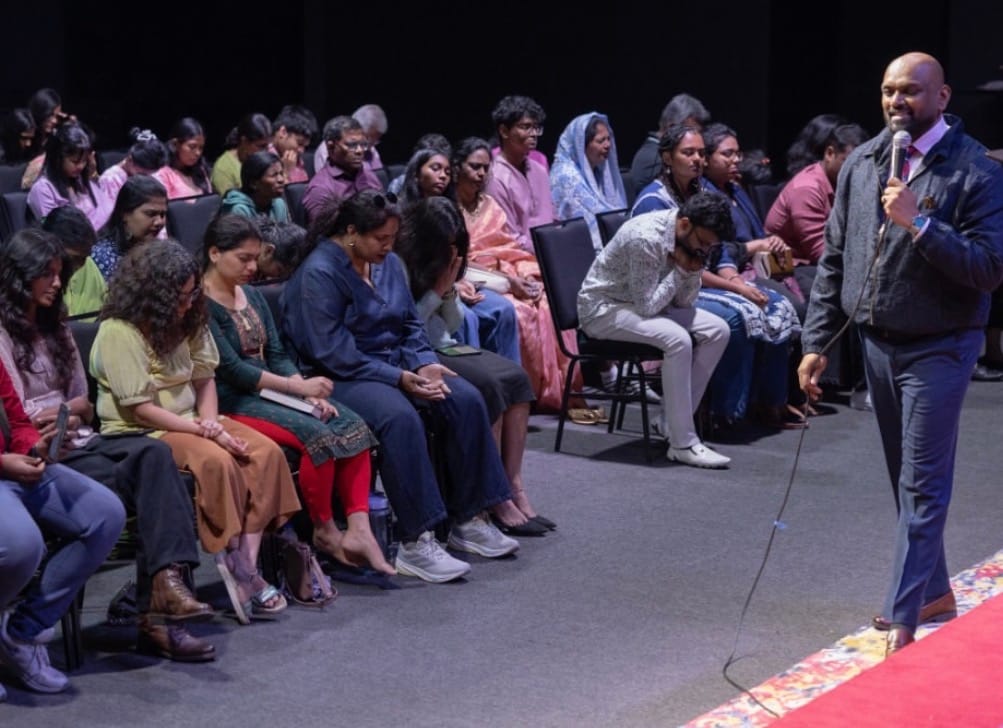
Everything that could go wrong did — and it all went wrong on this Sunday, about ten minutes before I walked up to preach.
The sound system died. Not a glitch, not a feedback squeal you can fix by adjusting a knob. Just — gone. One of our team members looked at me with that specific expression that pastors learn to recognise: we have no plan for this. Team found a makeshift solution — a wired mic connected to one our smaller speaker set up. We took it. Better than nothing, Except halfway through the message, that gave up too.
So I did what any reasonable person of faith would do in that moment. I stepped closer to the congregation and preached at full volume. Old school. No mic, no monitor, no feedback loop. Just a room, a Bible passage, and whatever lung capacity God had decided to give me that particular Sunday morning.
Honestly? Part of me wanted to laugh. Here I was, preaching about Jesus walking through locked doors — about how no barrier can stop a risen Saviour — while technology kept slamming doors in my face one after another, and its seemed a perfect opportunity for me to to demonstrate this live on how to break open this closed door!
But here's the thing I noticed. Nobody left. The room got more invested in what i was speaking about. Something about stripping away all the production made it feel less like a church service and more like a conversation. By the time I got to John 20, I wasn't thinking about the sound system anymore. I don't think anyone else was either.
God has a way of showing up when things stop working the way they're supposed to.
Which, as it turns out, was exactly what the Sunday message was about.
The room nobody talks about
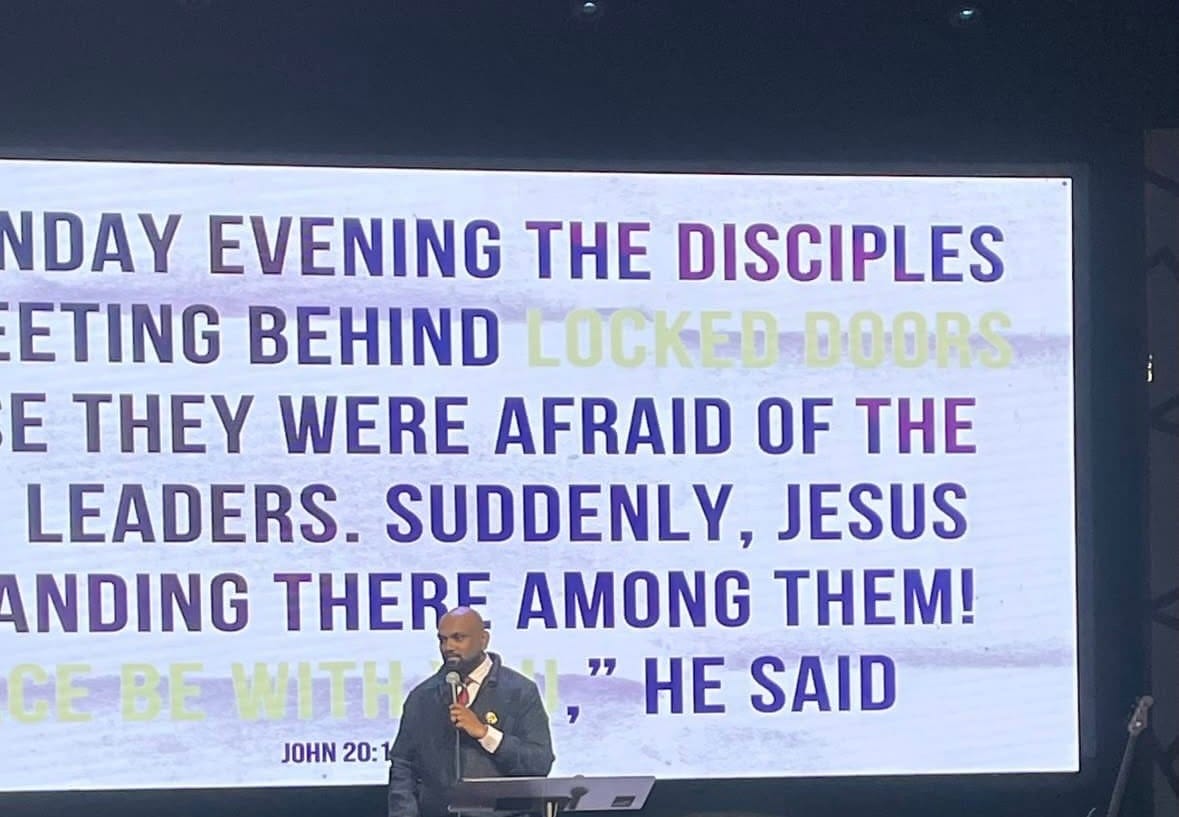
John 20:19 — "On the evening of that first day of the week, when the disciples were together, with the doors locked for fear of the Jewish leaders, Jesus came and stood among them."
Think about who is in that room. These are people who walked with Jesus for three years. They heard the teaching firsthand. They watched the miracles up close. And on the evening of the resurrection — hours after the tomb was found empty — they are behind a locked door. Afraid.
That's not triumphant. That's not the energy of people who have processed what just happened. That's people in shock, trying to survive the gap between what they believed and what they actually experienced.
And if I'm honest, I think a lot of us know that gap.
Maybe you came to church on Sunday carrying something heavy that you haven't told anyone about. Maybe you believed God for something specific and it didn't happen the way you expected, and something quietly closed in you that hasn't opened since. Maybe you're in one of those seasons where God doesn't feel distant in a poetic, romantic way — he just feels absent. And that absence has been going on long enough that you've started to wonder if you've been wrong about all of it.
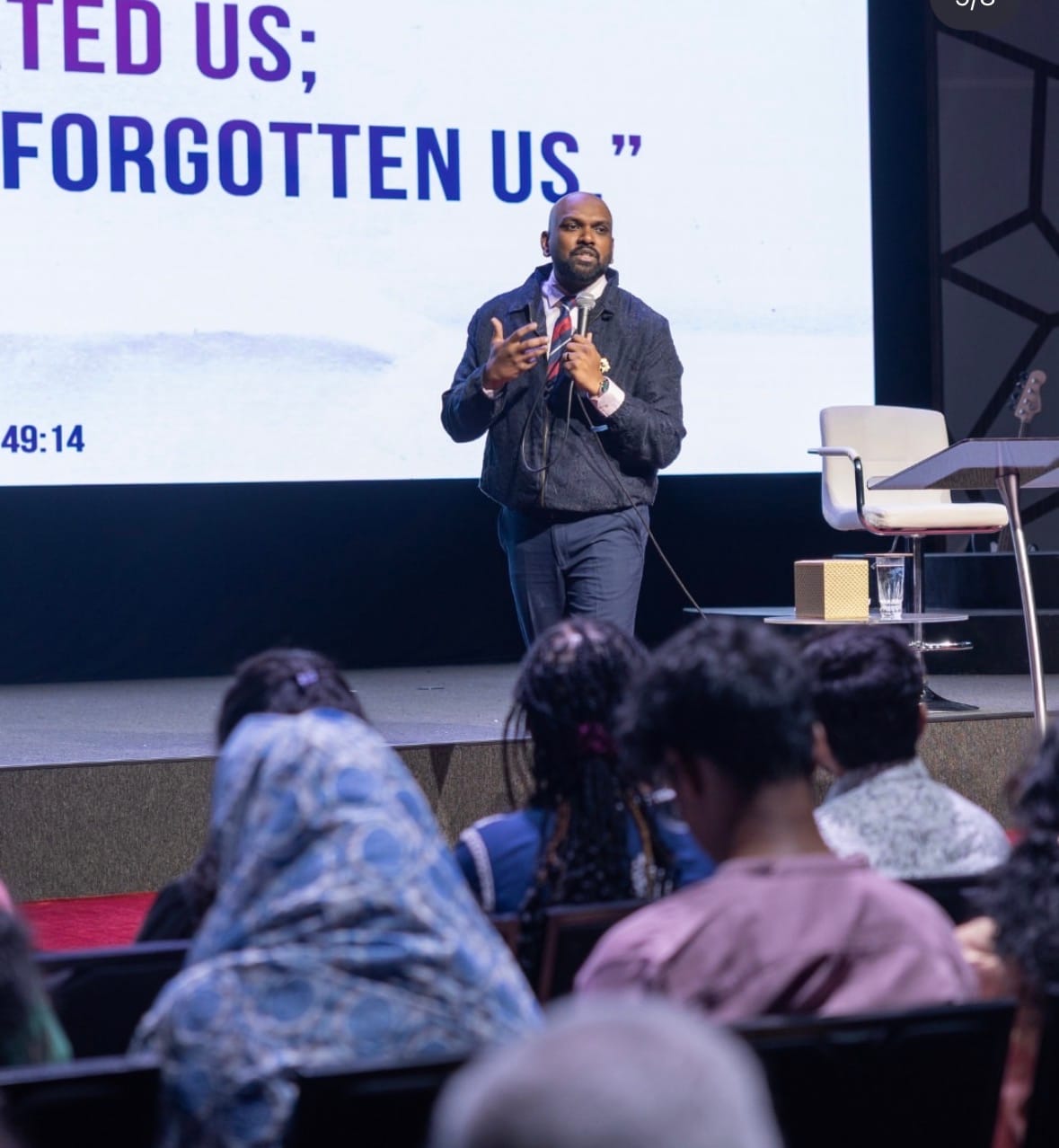
Isaiah 49:14 captures it plainly: "But Zion said, 'The Lord has forsaken me, the Lord has forgotten me.'" That's not a weak faith talking. That's an honest prayer from someone who has been waiting longer than they expected.
The locked room isn't a metaphor for spiritually immature Christians. It's a picture of real people in a real crisis. And the fact that it's in the Bible tells us something — God is not pretending those rooms don't exist.
The doors we lock
The disciples locked theirs out of fear of the authorities. But in my experience, people lock rooms for other reasons too.
Grief. When you lose someone — a person, a dream, a season — something in you shuts down. You stop expecting. You go quiet in places that used to be loud. Job sat in silence for seven days after losing everything (Job 2:13). Not praying, not praising. Just sitting in the rubble. Psalm 88 is the darkest psalm in the Bible. It ends with the word "darkness." No resolution, no sunrise. A man behind a closed door. And God left it in the canon. He didn't edit it out.
Disappointment with God. This is the one that's hardest to say out loud in church, because it sounds like failure. But when the healing didn't come, when the marriage fell apart anyway, when the child you dedicated didn't come back — something closes. You don't stop believing exactly. You just stop expecting. You maintain a polite distance. You show up, you sing the songs, but somewhere inside a door has quietly shut.
Martha did this. When Jesus finally arrived after Lazarus had already died, she didn't run to him with praise. She ran to him with: "Lord, if you had been here, my brother would not have died" (John 11:21). That is a locked door with someone knocking on the other side of it.
Shame. Peter's locked door had a specific name on it. Three times he denied knowing Jesus — once to a servant girl, not even a soldier — and then the rooster crowed and Luke 22:61 says Jesus turned and looked at him from across the courtyard. That eye contact. Peter went out and wept bitterly.
There's a difference between guilt and shame that matters here. Guilt says I did something wrong. Shame says I am something wrong. Peter didn't just fail — he failed at the one thing that mattered most, in the worst possible moment, in a way he had publicly promised he never would.
And yet. Sunday evening, Peter is still in the room. Sitting with the shame, inside the locked room, with everyone else. He hadn't gone home to Galilee. He hadn't walked away from the community. He was there.
Sometimes just staying in the room is itself an act of faith.
What Jesus did with the locked door
He didn't break it down. He didn't stand outside and wait for them to open it — which is the picture from Revelation 3:20, beautiful as that is. He didn't lecture them about why they'd locked it.
In John 20 he does something different. He walks through it.
There's no dramatic entrance in the Greek text. The NLT renders it "Suddenly, Jesus was standing there among them" — but even "suddenly" implies a transition that the original doesn't quite have. He simply was there. One moment he isn't in the room, and then he is. The shift is instantaneous.
I want you to sit with that word for a second. Suddenly.
No knock. No announcement. No buildup. The disciples didn't open a door, didn't hear footsteps, didn't have a moment to compose themselves or wipe their faces or rehearse what they were going to say. One moment — fear, confusion, locked doors. The next moment — Jesus. Standing among them. Already there.
That's not how you visit someone you're disappointed in. That's not how you show up to people who let you down. You don't walk through walls for people you've given up on.
The resurrection body of Jesus is not limited by the physical barriers of a fallen world. Death couldn't hold him. A locked door couldn't hold him. The walls we put up — years of disappointment, emotional distance, all the ways we quietly protect ourselves from being hurt again — none of them can keep a risen Jesus out.
He can walk through all of it.
And when he gets there, after everything — the betrayal, the denial, the abandonment, the hiding — his first words are not "Why did you lock the door?" Not "I'm disappointed in you." Not "Didn't I tell you this would happen?"
"Peace be with you."
Just that.
The Hebrew idea behind shalom isn't just the absence of conflict. It means wholeness — nothing broken, nothing missing, everything the way it was always meant to be. Jesus didn't walk into that room and offer an explanation. He didn't open with a correction. He brought something with him and he named it immediately.
Peace. For people who had just spent three days in the worst fear of their lives. Peace. For Peter, who was still carrying the weight of three denials. Peace. For all of them, hiding behind a locked door on the same evening the tomb had been found empty.
He walked in and the first thing out of his mouth was a gift.
That tells me something about the character of this Jesus we follow. When he finally gets to where you are — past every wall you've built, through every locked door you've sealed — he doesn't come in with a list of grievances. He comes in with peace. He comes in with shalom. He comes in with the declaration that wholeness is possible, that nothing is too broken, that the very thing you thought disqualified you from being in the room is exactly the thing he's walking toward.
If you want to go deeper on what God's love actually looks like — especially on the days when it doesn't feel like enough — I unpacked 1 John 3:1 and the idea of lavish, wisdom-guided love here: God's Lavish Love and Perfect Wisdom
This doesn't make you a bad Christian
The story in John 20 tells us a few things we tend to skip over in church.
Fear is not the opposite of faith. Jesus never once told the disciples they were wrong to be afraid. He said "peace" — which is the answer to fear, not an accusation against it. You don't say peace to someone who has no reason to be afraid. You say it to someone who genuinely is.
Doubt is not the opposite of faith. Thomas doubted and Jesus came back. A week later. To the same room. For one person (John 20:26-27). That tells you something about how God responds to honest doubt — he doesn't abandon it, he shows up inside it.
Hiding is not the opposite of faith. Every one of those disciples was behind that locked door. Peter, who would preach at Pentecost. John, who would write Revelation. They were all hiding on Sunday evening. And Jesus commissioned them from that room.
Grief is not the opposite of faith. Jesus wept at the tomb of Lazarus (John 11:35). He already knew he was going to raise him. He wept anyway. Because grief is love with nowhere to go, and Jesus felt it too.
The locked room is not a detour
The disciples ran to that room out of fear. But it became the place where they encountered the risen Jesus.
God has a habit of meeting us in the place we ran to, not the place we think we should be.
Moses met God at the burning bush — in the wilderness, where he had fled in shame after killing an Egyptian. Elijah met God under a broom tree — after running for his life, asking to die. Jacob met God at the ford of Jabbok — alone in the dark, after years of running from the consequences of his own deception.
And Obed-Edom? He welcomed the presence of God into his home at a moment when everyone else was afraid to go near it — and his entire household was transformed. I wrote about what that looked like in The Obed-Edom Effect. The principle is the same: when you open the door to God's presence, even in the most unlikely season, things change.
The locked room is not a pause in your story with God. It might be the address where the next chapter begins.
Romans 8:11 — "And if the Spirit of him who raised Jesus from the dead is living in you, he who raised Christ from the dead will also give life to your mortal bodies because of his Spirit who lives in you."
The same Spirit. The same power that looked at a sealed tomb with a Roman guard posted outside it and said not today. That power isn't sitting somewhere in heaven waiting to be activated. It's already at work in you.
Ephesians 1:19-20 calls it "his incomparably great power for us who believe — the same mighty strength he exerted when he raised Christ from the dead." Present tense. For us.
And 2 Corinthians 5:17 — "If anyone is in Christ, the new creation has come: the old has gone, the new is here."
Not coming eventually. Here.
One thing to take with you
Think about one area where you're living as if Jesus is still in the tomb. One place where your behaviour says I don't actually believe he rose. A habit you keep surrendering and taking back. A relationship you know needs to change but you haven't moved. A version of yourself you quietly stopped pursuing because the disappointments stacked up. The distance between the God you talk about on Sunday and the God you actually talk to on Monday morning.
The empty tomb isn't just good news for eternity. It's fuel for today. Permission to start again — not to pretend the past didn't happen, but to receive the grace of a new beginning as a real and actual gift.
Because he is not in that tomb.
And you don't have to stay in yours.
More from the blog you might find helpful:
• Praise Facilitates Your Access to His Nearness — because praise is often the first step out of the locked room
• Drink from Him to Transform — on what it actually looks like when Jesus heals brokenness from the inside out